
How Scan-to-Verify Reduced Pick Errors 35% in a 3PL Warehouse (Hypothetical Case)
Pick Errors Are Expensive. Here's How One Warehouse Stopped Bleeding Money.
Note: The operation described in this article is a hypothetical scenario based on common patterns observed across real 3PL warehouse environments. The figures and outcomes are illustrative, not drawn from a specific client case.
A pick error isn't just a wrong item in a box. It's a customer service call, a return label, a reshipment, a warehouse team spending time fixing something that should have been right the first time, and a client relationship under strain. In a third-party logistics operation, where you're managing fulfillment for multiple clients simultaneously, pick accuracy isn't just an operational metric ??it's a commercial one.
The 3PL in this scenario was processing around 1,400 orders per day across a 30,000 square foot facility. Their pick error rate averaged 2.1% (mispicks divided by total pick lines over two-week baseline) ??not catastrophic, but enough to generate meaningful downstream cost and consistent friction with two of their key clients. The pressure to fix it was real.
Meet the Operation: A Mid-Sized 3PL Under Pressure
The facility handled consumer goods for five client brands across apparel, personal care, and small electronics. SKU counts were high ??over 3,200 active SKUs across all clients ??and the mix changed frequently with seasonal product rotations.
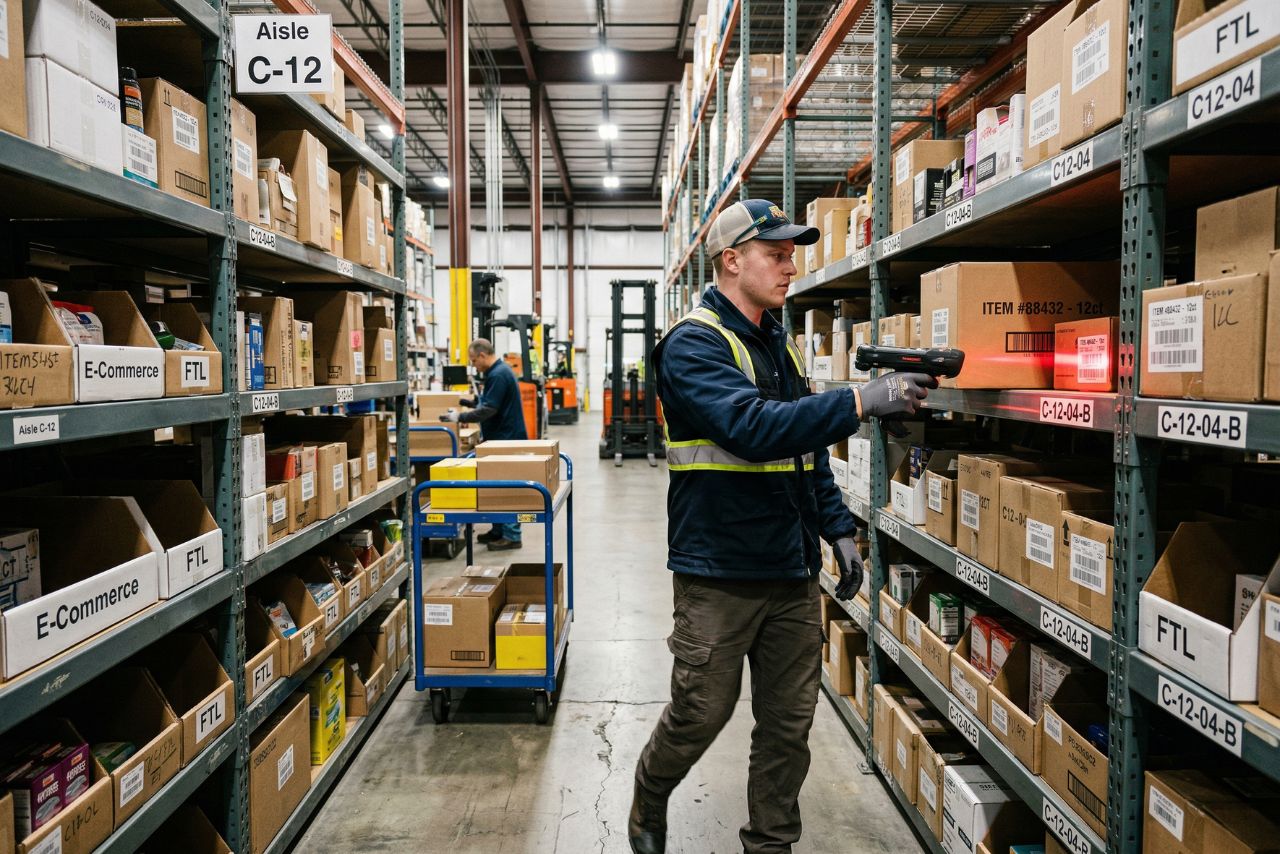
Picking was done with paper pick lists printed at the start of each shift. A picker would work through the list, manually checking off each item, and verify quantities by eye before moving to the packing station. The system had worked adequately when order volumes were lower, but as throughput increased, the process was showing its limits.
The warehouse manager had a strong intuition about where errors were coming from, but no data to confirm it. That was the first problem to solve.
Where the Errors Were Coming From
A two-week error analysis ??tracking which SKUs were generating returns and mispicks, at what point in the process errors were being caught, and which pickers were involved ??revealed three primary sources:
Similar-looking SKUs in adjacent locations
Several product families had multiple variants ??size, color, scent ??stored in nearby bin locations with similar label formats. Pickers working at speed were selecting the wrong variant on roughly 40% of identified error cases. The location assignments made logical sense from a slotting perspective but created visual confusion at the point of pick.
Quantity verification by eye
For SKUs picked in multiples (e.g., pick 4 units), errors clustered around quantities of 3 or 5 ??one too many or too few. With no verification mechanism at the moment of pick, quantity mistakes were only caught at packing, and sometimes not until a client complaint came in.
High-traffic SKUs during peak hours
The facility's top 50 SKUs by volume accounted for over 60% of total error incidents. These were the items picked most frequently, often under the most time pressure. The correlation between scan frequency and error rate was clear ??and pointed toward a solution.
The Fix: A Scan-to-Verify Workflow
The solution wasn't a wholesale technology overhaul. The facility already had a WMS in place. What it lacked was a scan-verification step at the moment of pick.
The implementation involved three changes:
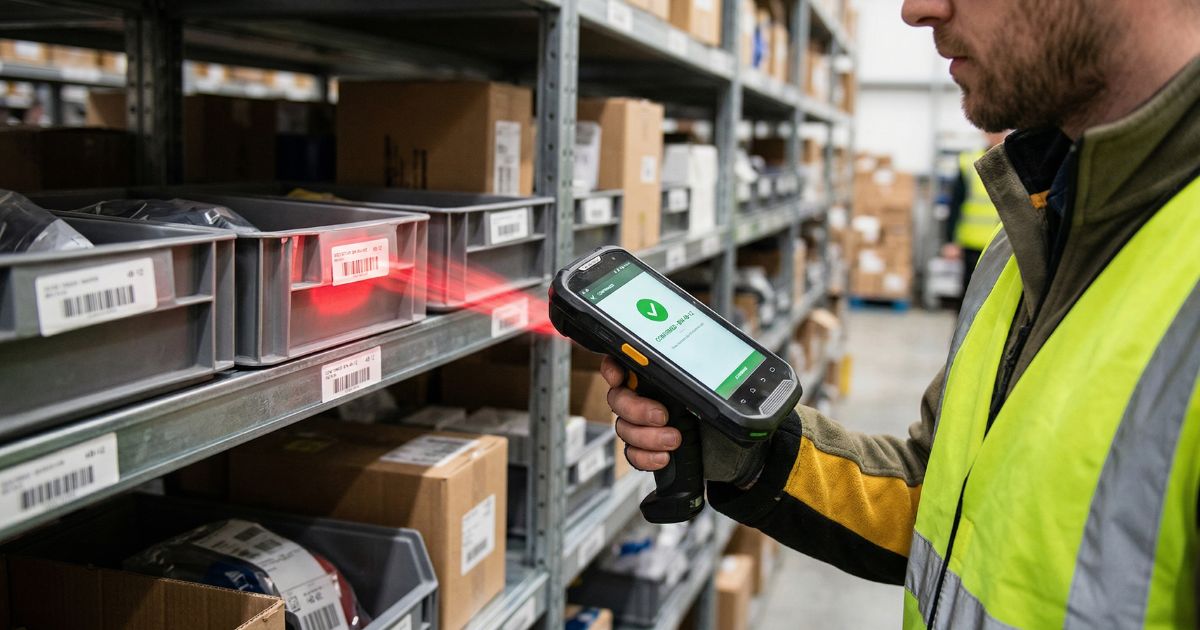
- Wireless handheld scanners replacing paper pick lists. Each picker was equipped with a rugged Wi-Fi-connected handheld scanner running the WMS mobile application. The system directed picks in sequence and required a barcode scan to confirm each line before moving on.
- Scan-to-confirm on quantity. For multi-unit picks, the system required the picker to scan the item once per unit ??eliminating the quantity-by-eye estimation that had driven a significant share of errors.
- Location barcodes on all bin positions. Each bin location received a printed location barcode. Pickers scanned the location label before scanning the product ??a two-step confirmation that dramatically reduced wrong-variant picks from adjacent locations.
Device selection: The facility chose mid-range rugged Android handhelds (IP54 for dry indoor picking, 2D imager, 10hr battery for full shifts) ??adequate for their environment without overspecifying for features they didn't need. The devices integrated via the existing WMS mobile workflow (keyboard wedge emulation for real-time scan confirmation), requiring no custom development work.
Rollout took three weeks: one week of configuration and testing, one week of parallel operation (paper and scanner simultaneously), and one week of full cutover with daily review. The warehouse manager ran the pilot with the four most experienced pickers first, using their feedback to refine the workflow before wider deployment.
The Results: 35% Fewer Pick Errors in 90 Days
Ninety days after full deployment, the pick error rate had dropped from 2.1% to 1.35% ??a 35% reduction. The change was uneven across error types:
- Wrong-variant picks dropped by over 60%, driven primarily by the location-scan confirmation step.
- Quantity errors dropped by approximately 45%, driven by scan-per-unit confirmation.
- High-traffic SKU errors during peak hours fell by around 30% ??improved, but still the highest-error category, flagging a need for further slotting optimization.
Secondary effects: the time spent by packing staff catching and correcting mispicks dropped noticeably. Client escalations related to pick accuracy decreased significantly. One key client, who had been tracking error rates as a KPI in their monthly review, acknowledged the improvement in writing.
The investment was meaningful ??hardware, WMS mobile licensing, and implementation labor ??but estimated payback was under 7 months based on reduced returns, reships, and internal labor.
What This Means for Your Operation
This scenario isn't unusual. The pattern ??high SKU count, paper-based verification, quantity errors and similar-variant confusion driving the majority of picks ??describes a large share of operations that haven't yet implemented scan-to-verify workflows.
A few principles that transfer broadly:
- Error analysis before solution selection. Understanding which SKUs, which workflow steps, and which conditions are generating the most errors points directly at the right solution design. Buying scanners without this analysis often means solving the wrong problem.
- Location barcoding is frequently the highest-leverage change. It costs very little ??printed labels and a configuration update ??and directly addresses the wrong-location and wrong-variant errors that make up a large share of mispick incidents in high-SKU environments.
- Start with your highest-error SKUs. A targeted pilot on the products generating the most complaints gives you fast feedback and fast results ??which builds internal support for broader rollout.
- Don't overspecify hardware. The facility in this scenario used mid-range rugged handhelds with IP54 and a 10-hour battery, not the most expensive devices on the market. Match the spec to the actual environment.
Key Takeaways
- A 2.1% pick error rate sounds modest, but generates substantial real cost in returns, reshipments, and client relationship friction.
- Scan-to-verify workflows ??requiring a barcode scan to confirm both location and product at the point of pick ??directly address the most common error sources.
- A well-structured 90-day rollout (pilot ??parallel ??full cutover) with daily review allows the team to refine the workflow before full commitment.